Cart
0
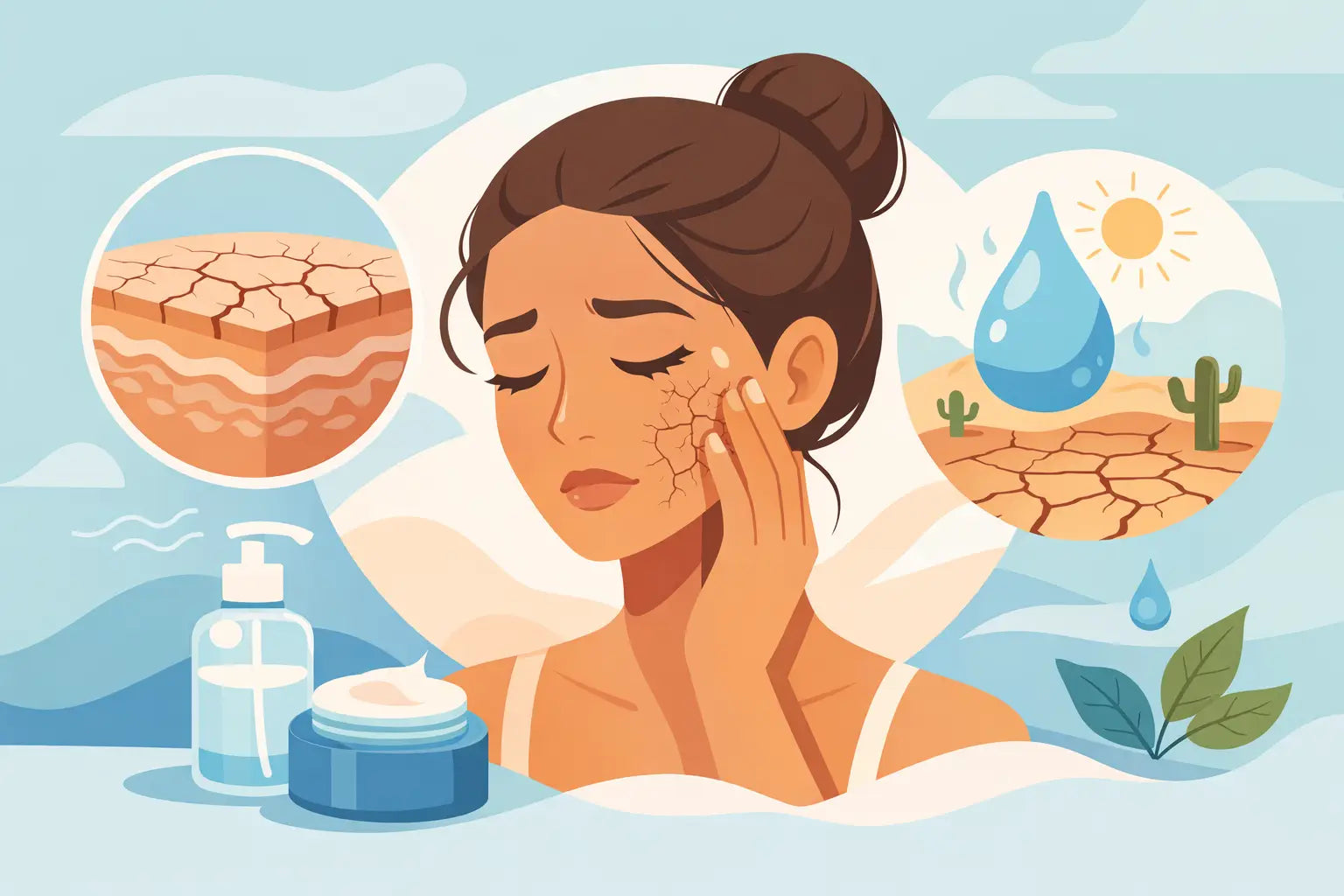
Your skin can feel tight by noon, look shiny by afternoon, and still seem flaky around the nose or cheeks. If you keep wondering, why is my skin dehydrated, the answer is usually less about your skin type and more about what your skin is missing - water, barrier support, or both.
Dehydrated skin is a condition, not a fixed skin type. Oily skin can be dehydrated. Combination skin can be dehydrated. Even skin that looks resilient can quietly lose water and start showing it through dullness, rough texture, exaggerated fine lines, and that uncomfortable just-washed feeling that never quite goes away.
What dehydrated skin really means
When skin is dehydrated, it lacks water. That sounds simple, but the reason it matters is that water balance shapes how skin looks, feels, and functions. Well-hydrated skin appears smoother, calmer, and more luminous. When water levels drop, skin often becomes tight, less supple, and more reactive.
This is where people often confuse dehydration with dryness. Dry skin lacks oil, while dehydrated skin lacks water. You can have one without the other, or both at the same time. If your skin produces oil but still feels tight or looks creased and tired, dehydration is often part of the picture.
Why is my skin dehydrated if I use skincare?
Sometimes the routine meant to help is part of the problem. Over-cleansing, layering too many actives, or using strong exfoliants too often can leave skin looking polished for a moment but stressed over time. The skin barrier becomes less able to hold onto water, so moisture escapes more easily.
A foaming cleanser that leaves your face squeaky-clean may actually be removing more than makeup or excess oil. Acids, retinoids, and exfoliating masks can also be useful, but frequency matters. Skin that is consistently overworked tends to lose its calm first, then its glow.
Even good formulas can become too much when combined without balance. A brightening serum, exfoliating toner, and resurfacing treatment might all make sense on their own. Used together too often, they can tip skin into dehydration.
The most common causes of skin dehydration
Weather is one of the biggest triggers. Cold air, indoor heating, wind, and long flights all pull moisture from the skin. In warmer months, sun exposure, air conditioning, and saltwater or chlorine can do the same.
Your routine matters just as much. Harsh cleansers, hot water, frequent exfoliation, and skipping moisturizer are common reasons skin starts losing water faster than it can replenish it. If your skin feels better immediately after a mist or serum but tight again an hour later, it may need more than a quick splash of hydration - it may need ingredients that help seal that hydration in.
Lifestyle can also play a role. Poor sleep, stress, dehydration from travel or alcohol, and a low-humidity environment can all leave skin looking less fresh. This does not mean drinking water alone will fix the issue, but internal hydration and external barrier care often work best together.
Then there is the less obvious cause: using products that are not suited to your current skin state. A routine that worked beautifully in summer may feel too light in winter. A cleanser you loved when your skin was oilier may now leave it stripped. Skin changes, and routines need to move with it.
Signs your skin is dehydrated
Dehydrated skin rarely shows up as just one symptom. More often, it appears as a mix of signals that feel slightly contradictory. Skin may look oily and dull at once. It can feel tight after cleansing, yet still break out. Makeup may cling to dry patches while your T-zone gets shiny.
Fine lines can also look more noticeable when skin is low on water. This is especially common around the eyes and mouth, where the skin is naturally thinner. Once hydration is restored, those lines often look softer and less pronounced.
Sensitivity is another clue. Skin that suddenly stings when you apply familiar products may be asking for less intensity and more support.
Why is my skin dehydrated and oily at the same time?
This is one of the most common frustrations, and it makes perfect sense. When skin lacks water, it can respond by producing more oil. That extra oil does not solve dehydration, though. It simply creates the impression that skin is nourished when it is actually unbalanced.
This is why oily, blemish-prone skin often benefits from hydrating layers. Lightweight humectants like hyaluronic acid, glycerin, and aloe can help draw water into the skin, while non-heavy moisturizers help reduce water loss. The goal is not to smother the skin. It is to bring it back into balance.
How to help dehydrated skin recover
The first shift is usually simplification. If your routine has become crowded, scale back for a week or two. Use a gentle cleanser, a hydrating serum, a moisturizer, and daily SPF. This gives your skin space to recalibrate.
Look for formulas that combine water-binding ingredients with barrier-supportive ones. Hyaluronic acid helps attract water. Glycerin is quietly excellent for maintaining hydration. Urea can soften roughness while supporting moisture balance. Prebiotics can help support a healthier skin environment, especially when skin feels stressed or reactive.
Moisturizer matters more than many people think. Hydrating serums are helpful, but without a cream or lotion to help reduce water loss, the effect may feel short-lived. If your skin is oily, choose a light gel-cream or lotion texture. If it is dry or easily sensitized, a richer cream may feel more comforting.
Mists can be a beautiful part of the ritual, especially when skin feels tired or heated, but they work best as a layer within a routine rather than the routine itself. Think of them as a refreshing step, not the whole answer.
What to stop doing when skin is dehydrated
Pause the temptation to scrub your way back to smoothness. Rough texture from dehydration is not an invitation to exfoliate more aggressively. In many cases, that only deepens the cycle.
It also helps to avoid very hot water, especially when cleansing. Heat can compromise the skin barrier and leave skin feeling more stripped than clean. Lukewarm water is usually the gentler choice.
Be cautious with active-heavy routines. You do not need to fear exfoliants or treatment serums, but frequency should match your skin’s tolerance. If your skin is tight, shiny, irritated, and flaky all at once, it may need recovery before results.
A simple routine for dehydrated skin
Morning can be minimal and effective. Start with a gentle cleanse, or just rinse if your skin feels comfortable. Follow with a hydrating serum, then a moisturizer that suits your texture preference, and finish with sunscreen.
At night, cleanse thoroughly but gently. Apply a hydration-focused serum or essence, then a moisturizer that helps hold that water in place. If you use exfoliating acids or retinol alternatives, alternate them rather than layering everything together.
This is where ingredient-led skincare can feel especially useful. A well-formulated routine does not need to be complicated. A few thoughtful products with humectants, soothing botanicals, and barrier-aware actives can bring skin back to comfort without making it feel heavy or overwhelmed. That balance is part of what makes modern routines from brands like NÉVO feel so intuitive - gentle in feel, precise in function.
How long does it take to fix dehydrated skin?
It depends on the cause. If the issue is seasonal or tied to one overly harsh product, skin can start to feel better within days. If your barrier has been stressed for weeks or months, recovery may take longer.
Consistency matters more than intensity. Skin usually responds best to calm, regular care rather than dramatic treatments. Once hydration returns, you may notice more bounce, a smoother surface, and a fresher kind of glow - the kind that looks less like shine and more like ease.
If your skin stays persistently uncomfortable, red, itchy, or inflamed despite simplifying your routine, it may be worth checking in with a dermatologist. Sometimes dehydration overlaps with sensitivity, eczema, or other skin concerns that need a more tailored approach.
The reassuring part is that dehydrated skin is often responsive. With the right balance of water-binding ingredients, barrier support, and a gentler rhythm, skin can return to itself. Not overnight, perhaps, but often more quickly than you expect. Start by listening to the signals your skin has already been giving you. A calmer, more luminous complexion usually begins there.