Cart
0
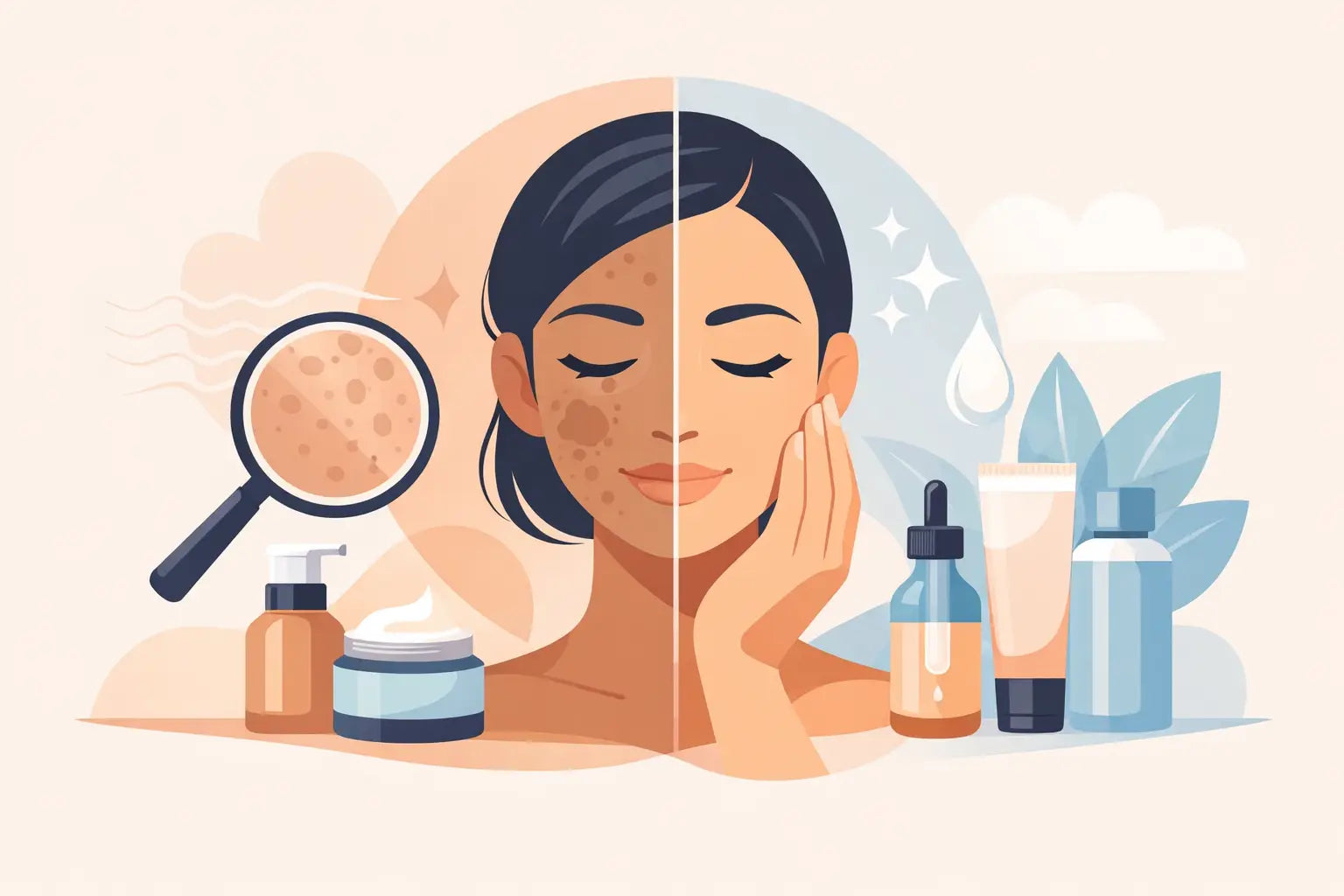
Uneven tone rarely shows up all at once. It settles in quietly - a few lingering post-blemish marks, a patch of dullness near the cheeks, a little extra pigment after summer, skin that looks healthy in one light and tired in another. Finding the best skincare for uneven tone starts with understanding that discoloration is not one single issue. It can come from sun exposure, past breakouts, irritation, dehydration, or simply a slower skin renewal cycle.
That is why the most effective routine does not chase brightness at any cost. It restores clarity with a steadier approach: targeted actives, consistent hydration, and formulas that refine without pushing skin into stress. When your routine is balanced, tone begins to look more even, glow looks more natural, and results tend to last.
What causes uneven tone in the first place?
Uneven tone is a broad concern, and that matters because different causes respond to different ingredients. For some people, the main issue is hyperpigmentation from UV exposure. For others, it is post-inflammatory marks left behind after blemishes, sensitivity, or friction. Dullness can also make tone appear uneven, even when pigment is not especially deep.
There is also the barrier factor. When skin is dehydrated or over-exfoliated, it can look blotchy, flat, and inconsistent in texture and color. In that case, adding more aggressive brighteners may not help much. A calmer, more replenishing routine often creates better visible change.
This is where skincare becomes more nuanced than a single "dark spot" product. The best skincare for uneven tone supports several things at once: pigment control, surface renewal, hydration, and resilience.
Best skincare for uneven tone: the ingredients that make a difference
If you are building a routine around visible radiance and clarity, a few ingredients tend to stand out for good reason.
Vitamin C remains one of the most reliable choices for brightening the look of uneven skin. It helps support a more luminous complexion while also defending against the visible effects of environmental stress. Well-formulated vitamin C products can be especially helpful for dullness and sun-related discoloration, although sensitive skin may prefer gentler derivatives over highly potent versions.
Kojic acid is another strong option when uneven tone is tied to dark spots or lingering pigment. It is often favored in routines designed to visibly improve clarity without relying on harsher treatment styles. Used consistently, it can help skin look more balanced and refined.
Lactic acid is a beautifully versatile exfoliating acid for this concern. It helps dissolve the buildup of dull surface cells while also drawing in moisture, so skin feels smoother rather than stripped. For many people, it offers a softer path to brightness than stronger exfoliants.
Niacinamide deserves attention too, even though it is sometimes overshadowed by flashier actives. It supports barrier function, helps calm the look of redness, and can improve the appearance of unevenness over time. It layers well with many routines, which makes it one of the easiest ingredients to keep using consistently.
And then there is hydration. Hyaluronic acid, prebiotics, and nourishing moisturizers may not sound like obvious brightening products, but they help skin hold onto the smooth, plump look that makes tone appear more even. When skin is comfortable and replenished, active ingredients tend to perform better.
A ritual that actually helps skin look more even
The most effective routine is usually not the most complicated one. It is the one you can repeat without irritating your skin.
Morning: protect your glow
Start with a gentle cleanser that removes overnight oil and residue without leaving skin tight. This step matters more than it gets credit for. If cleansing is too harsh, the rest of the routine has to work against unnecessary dryness.
Follow with a brightening serum. Vitamin C is ideal in the morning because it helps revive radiance while supporting skin against daily stressors. If your skin leans sensitive, choose a formula that feels comfortable and hydrating rather than intensely sharp.
Next comes moisturizer. A lightweight cream or gel-cream with humectants and barrier-supportive ingredients helps keep tone looking fresh throughout the day. Skin that stays hydrated reflects light more evenly, which instantly improves the overall look of the complexion.
Then sunscreen, every single day. No brightening routine can do much if UV exposure keeps encouraging discoloration. This is the non-negotiable step in any uneven tone ritual. Without it, progress is slower and recurrence is far more likely.
Evening: renew without overdoing it
At night, cleanse again to remove sunscreen, makeup, and daily buildup. If you wear heavier products, a double cleanse can be useful, but it should still leave skin soft, not squeaky.
This is the best time for exfoliating or pigment-focused treatments. A lactic acid serum or exfoliating treatment used a few nights a week can help lift dull surface cells and improve the look of patchy tone. On alternate nights, a formula featuring kojic acid or another targeted brightening active can help address stubborn marks.
The key is restraint. Layering multiple strong actives in one evening may feel ambitious, but it often creates the opposite of a glow. Skin becomes irritated, barrier function drops, and unevenness can look worse before it looks better.
Finish with a nourishing moisturizer. If your skin is prone to dehydration, this is where richer textures can be especially helpful. Sealing in comfort overnight gives your skin a calmer canvas to renew itself.
How to choose the best skincare for uneven tone by skin type
Not every brightening routine should look the same. Skin type changes how much exfoliation, moisture, and active intensity you can comfortably handle.
If your skin is oily or blemish-prone, uneven tone often comes from post-breakout marks plus excess surface buildup. In that case, a routine built around gentle exfoliation, lightweight hydration, and targeted brightening treatments usually works well. You want clarity, but not the kind that leaves skin dehydrated and reactive.
If your skin is dry, the focus should shift slightly. Dry skin can look uneven because it lacks moisture as much as pigment control. Lactic acid is often a strong fit here because it smooths while supporting hydration. Pairing brightening serums with richer moisturizers helps prevent that thin, tight feeling that can make discoloration seem more obvious.
If your skin is sensitive, less is often more. Look for soothing, well-balanced formulas and introduce only one active at a time. You may see better long-term results from a moderate vitamin C, niacinamide, and barrier-supportive moisturizer than from an aggressive mix of exfoliants.
If your skin is mature, uneven tone may sit alongside visible dullness, roughness, and a loss of bounce. A routine that combines gentle resurfacing, hydration, and brightening ingredients can help restore a smoother, more luminous look. The goal is not just to fade spots, but to revive the whole complexion.
Why consistency matters more than intensity
Uneven tone is one of those concerns that rewards patience. Many people abandon a routine too early or push too hard too fast. Neither approach tends to serve the skin well.
Visible brightening usually happens in layers. First, skin looks a little fresher. Then texture starts to feel smoother. Over time, deeper discoloration begins to soften. This slow progression is normal. It does not mean your routine is failing.
In fact, a gentler routine used consistently often outperforms an intense one that causes irritation. Skin loves rhythm. Daily protection, regular hydration, and thoughtful active use create a steadier path to clarity than sudden bursts of strong treatment.
For shoppers who want results with a more elevated feel, this is where botanically inspired, ingredient-led formulas can be especially appealing. The right blend of modern actives and calming, sensory textures makes it easier to stay consistent, and consistency is where glow becomes visible.
What to avoid when treating uneven tone
The temptation is to treat discoloration like something you can scrub away. Usually, that backfires.
Over-exfoliating is one of the most common mistakes. More acid does not automatically mean faster fading. If skin becomes inflamed, tone can look redder, more reactive, and less even overall.
Skipping moisturizer is another one. People often assume brightening should feel active, almost sharp. In reality, skin often responds better when brightening products are anchored by comfort and hydration.
And of course, skipping sunscreen undercuts everything. If you only change one habit for uneven tone, make it daily sun protection.
The skin you want is rarely created by force. It is created by repetition, calm formulas, and a ritual that supports clarity without stripping away softness. When you choose the best skincare for uneven tone, look for more than a brightening claim. Look for a routine that helps your skin feel balanced, replenished, and quietly radiant over time.