Cart
0
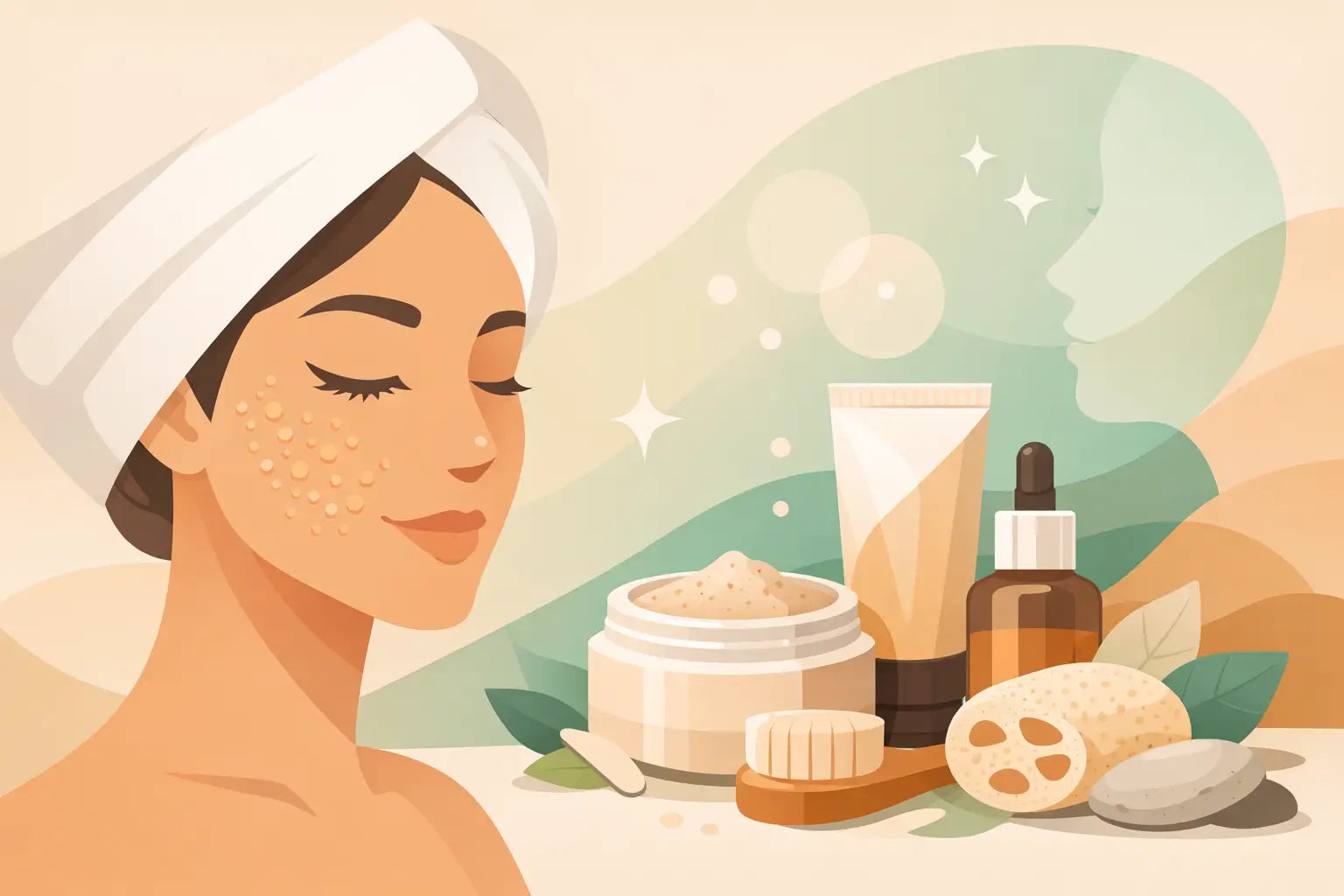
Texture rarely shows up all at once. It starts as a rough patch along the cheeks, tiny bumps that catch the light, or makeup that suddenly sits unevenly across the skin. Finding the best exfoliator for textured skin is less about choosing the strongest formula and more about choosing the one your skin can actually live with - consistently, comfortably, and with visible results.
Textured skin can come from several places at once. Dead skin buildup is one common cause, but so are clogged pores, dehydration, lingering post-breakout congestion, and a weakened skin barrier that leaves the surface feeling uneven. That is why one exfoliator can make skin look luminous in a week, while another leaves it tight, reactive, and no smoother than before.
The most effective approach is ingredient-led and gentle in rhythm. Smooth skin is usually the result of steady renewal, not aggressive scrubbing.
What causes textured skin in the first place?
If your skin feels rough rather than visibly flaky, texture is often tied to how skin cells are shedding. When that natural turnover slows, dead cells can linger on the surface and collect around pores. The result is skin that looks dull, feels bumpy, or appears uneven under makeup.
Congestion plays a role too. Oil, sunscreen, impurities, and leftover debris can settle into pores and create tiny bumps, especially around the forehead, nose, chin, and jawline. For some people, texture is also closely linked to dehydration. When skin lacks water, it can feel coarse and look less refined, even if breakouts are not the main concern.
This is where exfoliation becomes useful, but only when it is matched to the real cause. If the issue is surface dullness, a mild acid may be enough. If congestion is driving the roughness, pore-clearing ingredients matter more. If your skin is easily irritated, the best formula may be the one that works more slowly but protects your barrier.
The best exfoliator for textured skin depends on texture type
There is no single answer that works for every face. The best exfoliator for textured skin depends on whether your texture is dry and rough, clogged and bumpy, or sensitive and easily overstimulated.
If your skin feels uneven but also looks dull and dehydrated, lactic acid is often one of the most elegant places to start. It exfoliates gently while supporting a softer, more hydrated finish. Skin tends to look fresher rather than stripped, which makes it especially appealing for those who want glow without harshness.
If your texture is more about clogged pores and tiny bumps, salicylic acid can be a better fit. Because it is oil-soluble, it works inside the pore as well as on the surface. That makes it helpful for congestion-prone areas, especially if texture comes with blemishes or excess oil.
If your skin is reactive, easily flushed, or new to exfoliation, enzyme exfoliants or very low-strength alpha hydroxy acids can offer a calmer route. These formulas tend to feel softer on the skin and can help refine texture gradually, which is often the wiser trade-off for sensitive complexions.
Chemical vs physical exfoliation
For textured skin, chemical exfoliation usually gives the most refined results. Acids and enzymes loosen the bonds between dead skin cells so they can lift away more evenly. This tends to create a smoother, more polished surface over time, with less risk of micro-irritation.
Physical exfoliators, including scrubs, can still have a place, but they require a careful hand. If the particles are too rough or the pressure is too firm, they can aggravate texture rather than improve it. Skin may feel smoother immediately, yet become more inflamed or sensitized after repeated use.
That does not mean every scrub is automatically too harsh. Finely milled, well-formulated physical exfoliants can work for some skin types, particularly when used sparingly. Still, if your texture is persistent, clogged, or paired with sensitivity, a leave-on acid or enzyme treatment is usually the more dependable choice.
Ingredients worth looking for
Lactic acid is one of the most balanced exfoliants for textured skin. It helps remove dull surface buildup while drawing in moisture, which makes it especially beautiful for skin that feels both rough and thirsty.
Glycolic acid is stronger and penetrates more deeply because of its smaller molecular size. It can be highly effective for stubborn texture and visible dullness, but it is not always the best first step for sensitive skin. Results can be excellent, yet the margin for overdoing it is smaller.
Salicylic acid is ideal when texture is linked to clogged pores, blackheads, and breakout-prone areas. It helps clear the inside of the pore, which is why skin often starts to feel smoother with regular use even before it looks dramatically different.
Fruit enzymes can be a graceful option for those who want a gentler exfoliating experience. They tend to work on the surface and are often found in formulas designed to brighten and soften without the intensity some acids bring.
Supportive ingredients matter just as much. Hyaluronic acid, glycerin, aloe, panthenol, and prebiotics can help keep skin comfortable while exfoliating actives do their work. A good exfoliator does not just remove what is dull. It leaves the skin feeling calm enough to continue the ritual.
How to choose the best exfoliator for textured skin
Start with your skin’s tolerance, not your ambition. If you have been tempted by high percentages and dramatic before-and-afters, it helps to remember that smoother skin usually comes from consistency. A lower-strength exfoliator used regularly often outperforms a stronger one that leaves your skin too irritated to continue.
Consider the format as well. Toners and liquid exfoliants suit those who like lightweight layers. Serums can feel more targeted and treatment-focused. Masks offer a more ritualized experience and may appeal if you prefer exfoliation a few times a week rather than in a daily routine.
Leave-on formulas generally deliver more visible change because they stay on the skin longer. Wash-off products can still be effective, but they are often better for those who want a gentler introduction or have very sensitive skin.
If your skin is dry, look for exfoliants that pair acids with hydrating ingredients. If you are oily or blemish-prone, prioritize pore-clearing actives with a lightweight finish. If you are sensitive, choose simpler formulas with fewer competing actives and avoid stacking them with retinoids or strong vitamin C in the same routine.
How often should you exfoliate textured skin?
More is not better here. For most people, two to three times a week is enough to improve texture without compromising the skin barrier. If you are using a stronger acid, once or twice weekly may be plenty.
Daily exfoliation can work for some experienced users, especially with very mild formulas, but it depends on the rest of the routine. If you are already using retinoids, acne treatments, or multiple brightening actives, your skin may need a lighter touch.
A simple test is to pay attention to how your skin feels the morning after. If it looks smoother, more even, and quietly radiant, you are likely in a good rhythm. If it feels shiny but tight, suddenly stings when you apply moisturizer, or becomes red and reactive, that is not progress. It is a sign to pull back.
The routine that helps exfoliation work better
Exfoliation performs best inside a balanced routine. Cleanse gently, apply your exfoliator as directed, and follow with hydrating layers that cushion the skin. A barrier-supportive moisturizer matters more than many people think. It helps preserve the softness and clarity you are trying to create.
And during the day, sunscreen is non-negotiable. Freshly exfoliated skin is more vulnerable to UV exposure, and skipping SPF can make uneven tone and post-breakout marks linger longer. Smoothness and glow are easier to maintain when skin is protected.
For those building a refined ritual, it can help to keep the rest of the routine calm on exfoliation nights. Think hydration, replenishment, and ingredients that support the skin rather than challenge it further. That is often where texture starts to soften in a way that looks healthy, not overworked.
When the wrong exfoliator makes texture worse
If your skin suddenly feels rougher after exfoliating, the formula may be too strong, too frequent, or simply not suited to your skin type. Over-exfoliation can create irritation that mimics texture, leaving the skin bumpy, inflamed, and more vulnerable to dehydration.
This is especially common when people combine exfoliating acids, retinoids, scrubs, and acne treatments all in the same week without enough recovery. Skin does not always need more correction. Sometimes it needs less interference.
A thoughtfully formulated exfoliant, especially one that blends active renewal with skin-comforting botanicals and hydration, can make the process feel less like damage control and more like a ritual of reconnection. That balance is where elegant results live, and it is part of why ingredient-conscious brands like NÉVO Skincare resonate with people who want performance without a harsh edge.
The best exfoliator for textured skin is the one that makes your skin feel smoother month after month, not just for one bright evening. Choose the formula that meets your skin where it is, and let steady care do the refining.