Cart
0
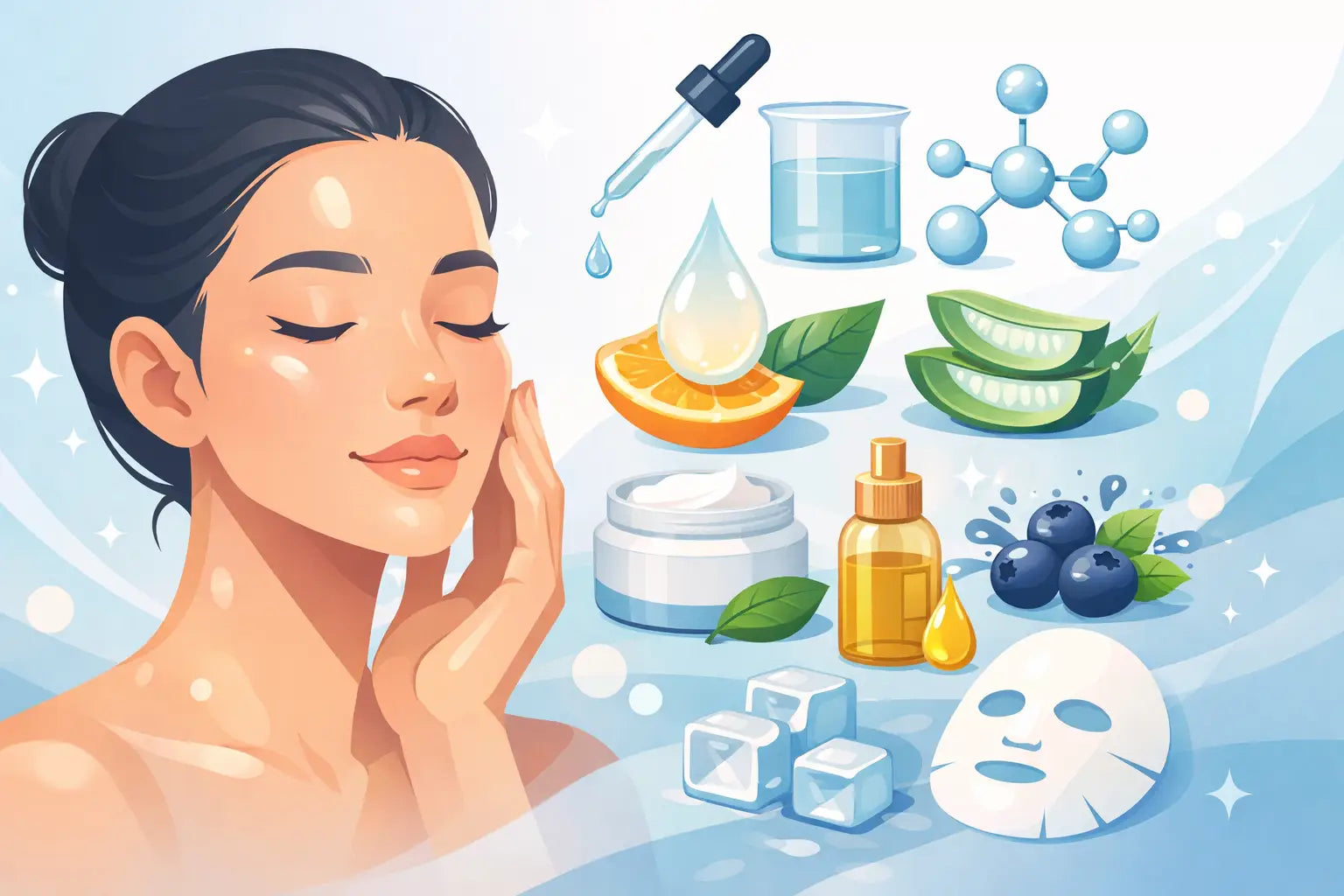
Glass skin is less about looking shiny and more about skin that appears hydrated, smooth, clear, and quietly luminous. If you are searching for the best ingredients for glass skin, the answer is not one miracle active. It is a thoughtful mix of hydrators, gentle exfoliants, barrier-supportive ingredients, and tone-evening actives that help skin look fresh from every angle.
That balance matters. Skin can only look lit from within when it has enough moisture, a refined surface, and a healthy barrier to hold everything together. Chasing glow with aggressive peels or too many actives often creates the opposite effect - tightness, irritation, and a dull, stressed look. The most beautiful radiance usually comes from formulas that work with the skin, not against it.
What makes skin look glassy?
The glass skin look comes from three visible qualities at once: hydration, clarity, and smooth texture. When the surface of the skin is well moisturized, it reflects light more evenly. When buildup is kept in check, skin looks clearer and softer. When tone appears more balanced, radiance becomes more noticeable.
This is why the best ingredients for glass skin tend to fall into a few categories rather than a single trend. You need ingredients that draw water into the skin, ingredients that gently encourage renewal, and ingredients that help calm and support the barrier so glow does not come at the expense of comfort.
10 best ingredients for glass skin
Hyaluronic acid
If your skin looks flat, dehydrated, or tired by midday, hyaluronic acid is often the first place to start. This humectant helps attract water to the skin, creating the soft, cushiony look that makes skin appear plump and reflective.
It is especially helpful in serums and lightweight hydrators layered under moisturizer. The key is to seal it in. On its own, hyaluronic acid can only do so much, especially in dry environments. Pairing it with a cream or emulsion helps maintain that dewy finish for longer.
Lactic acid
For many people, lactic acid is one of the most elegant exfoliants for glow. It removes dull surface cells while also offering some humectant benefits, which makes it gentler and more comfort-focused than harsher acids.
That matters if you want brightness without the stripped feeling. Lactic acid can help refine roughness, soften the look of uneven texture, and bring back clarity. If your skin is sensitive, it is often a better starting point than stronger exfoliating acids, though frequency still matters.
Niacinamide
Niacinamide is one of those ingredients that quietly improves almost everything. It helps support the skin barrier, balance the look of excess oil, refine the appearance of pores, and promote a more even-looking tone.
For glass skin, that versatility is valuable. A complexion tends to look more polished when redness appears calmer, texture seems smoother, and hydration is better maintained. Niacinamide works well in routines that need glow without heaviness, and it plays well with most other ingredients.
Vitamin C
Radiance often depends on tone as much as texture, which is why vitamin C earns its place among the best ingredients for glass skin. It helps brighten the appearance of dull skin and can improve the look of uneven pigmentation over time.
Not every vitamin C formula feels the same. Some are more active and fast-feeling, while others are gentler and better suited to sensitive skin. If your skin is easily reactive, look for stable, well-formulated options rather than chasing the highest percentage. Consistency usually matters more than intensity.
Polyglutamic acid
Less talked about than hyaluronic acid, polyglutamic acid is a beautiful hydration ingredient for that smooth, glazed finish people often want from glass skin routines. It helps hold moisture at the surface, giving skin a supple, comforted look.
It layers especially well in routines focused on softness and bounce. If you want your skin to look hydrated without feeling greasy, this ingredient can add that elegant, fresh finish that makeup artists and skincare minimalists both appreciate.
Ceramides
Glow is hard to maintain when the barrier is compromised. Ceramides help reinforce the skin barrier, reducing the dry, fragile look that can make even well-exfoliated skin seem lackluster.
This is where many glow routines go wrong. They focus on resurfacing but skip replenishment. Ceramides help skin hold onto moisture and feel stronger over time, which creates a healthier kind of radiance. If your skin often feels tight after cleansing or active treatments, this is an ingredient worth prioritizing.
Peptides
Peptides support skin that looks smooth, resilient, and refined. They are not an instant-glow ingredient in the same way as an exfoliating acid, but they contribute to the kind of healthy-looking skin that reflects light beautifully over time.
They fit especially well into routines aimed at early signs of aging, dehydration, or a loss of firmness. Think of peptides as part of the quiet architecture behind the glass skin effect - less flash, more structure.
Kojic acid
When lingering dark marks or uneven tone are standing between you and a clearer glow, kojic acid can be a smart addition. It is known for helping improve the appearance of discoloration, which makes skin look brighter and more even.
This ingredient works best with patience and a gentle hand. It does not need to be combined with every brightening active at once. In fact, if your skin is already using exfoliants or vitamin C, a slower approach may create better results with less irritation.
Prebiotics
Healthy-looking skin often has a calm quality to it. Prebiotics help support the skin environment, which can be especially helpful if your complexion is prone to visible stress, dryness, or imbalance.
For a glow-focused ritual, prebiotics bring a different kind of value. They do not exfoliate or brighten dramatically overnight, but they help create the conditions for skin to look steadier, softer, and more at ease. That calmness reads as radiance.
Urea
Urea deserves more attention in facial skincare. At the right level, it helps hydrate and gently smooth rough or flaky skin, making it a strong choice for anyone whose glow is being interrupted by dehydration or texture.
It is particularly useful when skin needs softness without heaviness. In elegant formulations, urea can make the complexion look more even and freshly moisturized, especially during colder months or after overusing actives.
How to choose the best ingredients for glass skin for your skin type
Not every glowing routine should look the same. If your skin is dry or dehydration-prone, focus first on humectants like hyaluronic acid and polyglutamic acid, then support them with ceramides or urea. You will usually see better results from deep hydration than from frequent exfoliation.
If your skin is oily or combination, niacinamide can help create balance while lightweight hydration keeps skin bouncy rather than slick. Lactic acid can refine the surface without making the routine feel too intense. The goal is a fresh sheen, not a stripped finish.
If uneven tone is your main concern, vitamin C and kojic acid may be more impactful than adding another hydrating serum. And if your skin is sensitive, barrier support should lead the ritual. Prebiotics, ceramides, and gentle hydration often bring back glow more effectively than strong resurfacing.
How to build a glass skin routine without overdoing it
A beautiful routine can stay simple. Start with a gentle cleanser that leaves skin comfortable, not squeaky. Follow with one or two targeted layers - perhaps a hydrating serum and a brightening or smoothing treatment. Then seal everything in with a moisturizer that supports the barrier.
Exfoliation should feel measured. Two or three nights a week may be plenty, especially if you are using lactic acid or other active ingredients. More is not necessarily better. Skin that is overworked may look shiny at first, but it rarely keeps that clear, luminous quality.
Morning routines benefit from hydration and brightness, while evening is often the right moment for repair-focused formulas. This is where an ingredient-led brand like NÉVO feels especially relevant - the best routines are not the busiest ones, but the ones built around clear skin goals and well-chosen actives.
The real secret behind glass skin
The glow people notice most is usually the result of consistency. One serum can add immediate dew, but lasting luminosity comes from keeping the skin hydrated, gently resurfaced, and well supported week after week.
If you are choosing where to begin, start with what your skin is missing most. If it feels thirsty, hydrate. If it looks dull, exfoliate gently. If tone looks uneven, reach for brightening support. Glass skin is not about chasing perfection. It is about creating a ritual that leaves your skin looking calm, smooth, and unmistakably alive.