Cart
0
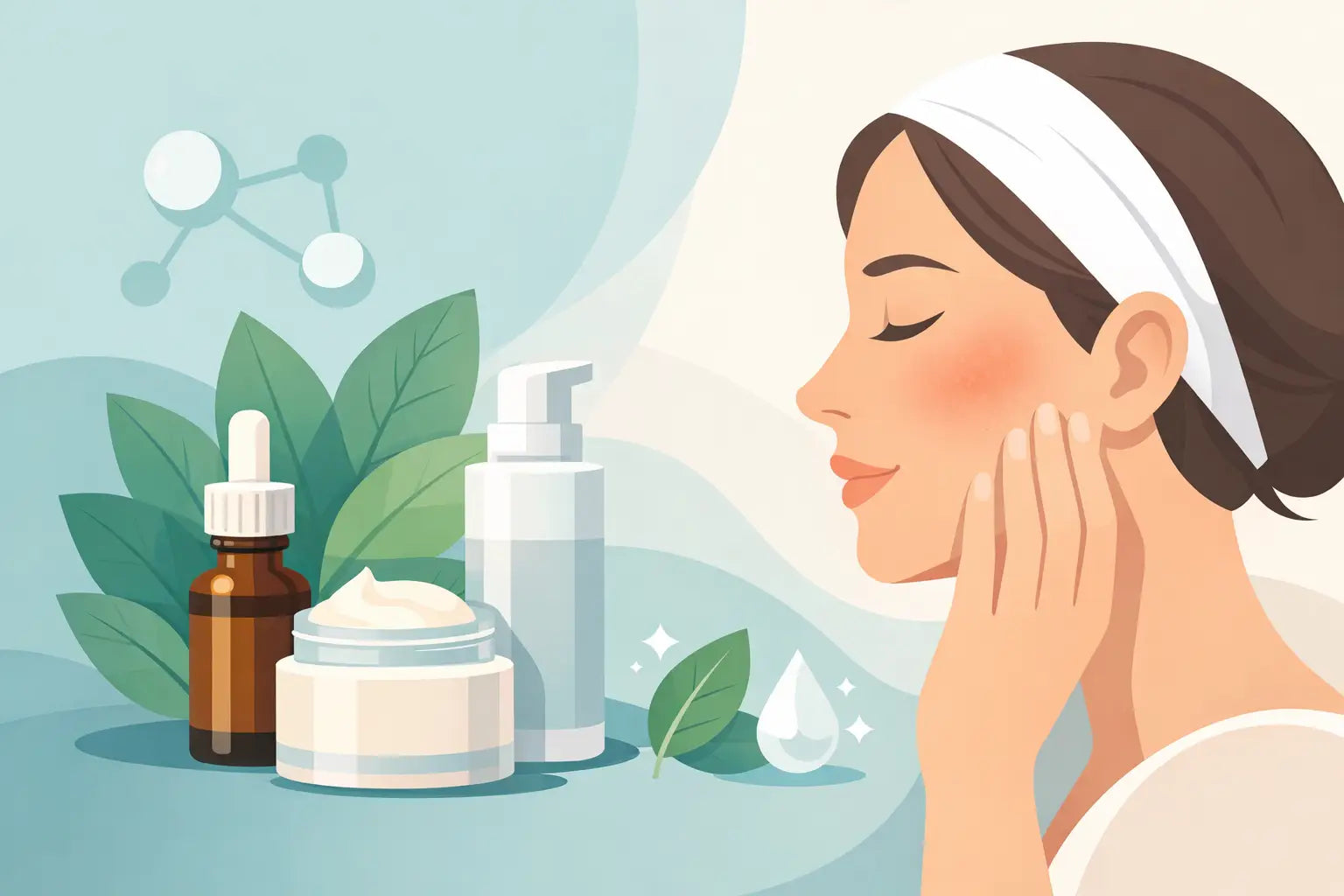
If retinol leaves your skin feeling tight, flushed, or unsettled by morning, you are not imagining it. For many people, finding a retinol alternative for sensitive skin is less about giving up results and more about choosing a formula that respects the skin barrier while still supporting smoothness, clarity, and visible radiance.
Retinol has earned its reputation for a reason. It can help refine texture, soften the look of fine lines, and encourage a more even tone. But sensitive skin often asks for a different pace. When your complexion is easily reactive, the most beautiful results usually come from consistency, not intensity.
What makes a good retinol alternative for sensitive skin?
A true alternative should do more than simply avoid irritation. It should still speak to the same concerns that make retinol appealing in the first place - dullness, uneven texture, early signs of aging, and loss of firmness.
For sensitive skin, the best options tend to work by supporting cell turnover gently, improving hydration, and reinforcing the barrier so skin can look brighter and smoother without that dry, overworked feeling. This is where ingredient choice matters. Not every retinol substitute performs in the same way, and not every sensitive skin type reacts to ingredients equally.
Some people are sensitive because their barrier is weakened. Others are reactive because of rosacea-prone skin, over-exfoliation, or a routine with too many actives layered at once. The right alternative depends on which kind of sensitivity you are dealing with.
Bakuchiol is the ingredient most people mean
When shoppers search for a retinol alternative for sensitive skin, they are often looking for bakuchiol. It is a plant-derived active known for helping improve the look of fine lines, texture, and uneven tone, with a gentler feel than traditional retinoids.
What makes bakuchiol especially appealing is its balance. It gives skin that smoother, more refined look people associate with retinol, but it usually does so with less dryness and visible irritation. For skin that craves results wrapped in a calmer ritual, that matters.
Bakuchiol is not a carbon copy of retinol, and it should not be treated like one. Results can be more gradual, and formula quality plays a major role. A thoughtfully made serum or moisturizer that pairs bakuchiol with hydrating and soothing ingredients often performs better for sensitive skin than a stronger active sitting in a stripped-down base.
If your skin becomes red, flaky, or shiny-tight with retinol, bakuchiol is often the first ingredient worth trying. It fits beautifully into routines focused on glow, softness, and skin comfort.
Other gentle alternatives worth knowing
Bakuchiol may be the headline ingredient, but it is not the only path to smoother-looking skin. Depending on your goals, a few other actives can offer retinol-adjacent benefits in a softer way.
Peptides are a strong option if your main concern is the look of firmness and fine lines. They do not resurface the skin in the same way retinol does, but they can help skin appear more supple and supported. For someone with very reactive or dry-sensitive skin, peptides may be easier to tolerate as a first step.
Lactic acid can also be useful, especially if dullness and rough texture are your biggest concerns. Compared with stronger exfoliating acids, lactic acid tends to feel more forgiving while also offering a touch of hydration. That said, it is still an exfoliant. If your skin is highly reactive, using it too often can leave you chasing sensitivity instead of glow.
Azelaic acid is another thoughtful choice, particularly for skin that is both sensitive and prone to redness, post-blemish marks, or congestion. It can help improve tone and clarity without the same adjustment period many people experience with retinol. For some, this ends up being the most practical everyday alternative.
Then there are barrier-supportive ingredients that do not replace retinol directly but make skin look better in a different, quieter way. Hyaluronic acid, prebiotics, ceramides, and nourishing botanical extracts can reduce the dehydrated, fragile look that often exaggerates fine lines and uneven texture. Sometimes what sensitive skin needs first is not a stronger active, but a steadier foundation.
How to choose the best one for your skin
The most effective retinol alternative for sensitive skin depends on your top concern.
If you want a general anti-aging option with a gentle profile, bakuchiol is usually the best place to start. If your skin feels thin, dry, or easily overwhelmed, peptides and barrier-focused hydration may be the better fit. If you are trying to improve tone, post-breakout marks, or redness, azelaic acid may give you more visible payoff. If your main issue is dullness and roughness, a low-strength lactic acid formula can help, as long as your skin tolerates exfoliation well.
This is also where texture and format come into play. Sensitive skin often responds better to cream serums, emulsions, or moisturizers that cushion the active, rather than sharp, fast-absorbing formulas that can feel more aggressive. Elegant skincare is not only about sensorial pleasure. In many cases, it is also about tolerability.
How to use a retinol alternative without triggering sensitivity
Even a gentle active can become too much if the rest of your routine is crowded. Sensitive skin rewards restraint.
Start with one treatment product and use it two to three nights a week. Give your skin a couple of weeks before increasing frequency. If you are already using exfoliating acids, benzoyl peroxide, or vitamin C, be mindful about layering. It is not that these combinations are always wrong, but reactive skin usually prefers a simpler rhythm.
A soothing cleanser and a nourishing moisturizer matter just as much as the active itself. If your cleanser strips or your moisturizer is too light, even the mildest alternative can feel less comfortable than it should. Think of your routine as a complete ritual, not a single hero ingredient trying to do all the work.
It can also help to apply your treatment after moisturizer if your skin is especially reactive. This approach softens the delivery and can make adaptation easier. You may get slower results, but for sensitive skin, slower is often smarter.
What results should you realistically expect?
This is where expectations need a little refinement. A retinol alternative for sensitive skin can absolutely improve radiance, texture, and the look of early fine lines, but the transformation may be subtler and steadier than what some people expect from prescription-strength retinoids.
That is not a weakness. For many skin types, visible improvement with less irritation is the better outcome. Skin that is constantly inflamed rarely looks its best, no matter how powerful the active. Calm skin often appears clearer, fresher, and more luminous simply because it is not stuck in a cycle of overcorrection.
With bakuchiol or peptides, you may notice skin feels smoother and more supple first, followed by gradual improvements in tone and softness. With azelaic acid, clarity and a more even look may come into focus earlier. With lactic acid, glow can show up quickly, but only if frequency is carefully managed.
Signs your alternative is working - or not
A good sign is skin that looks a little more rested after a few weeks. Texture feels more refined, makeup sits better, and that dull, tired cast starts to fade. You should not feel like you are paying for results with stinging, peeling, or persistent redness.
If your skin becomes increasingly reactive, shiny from dehydration, rough in patches, or unusually warm after application, the formula may still be too active for you, or your routine may be too crowded overall. Sensitive skin can struggle not only with strong ingredients, but with too many decent ingredients used all at once.
This is why thoughtful editing matters. One well-formulated serum can do more for your skin than a shelf full of overlapping treatments.
A softer path can still be effective
There is a certain confidence in choosing skincare that works with your skin instead of pushing against it. For sensitive complexions, that often means stepping away from formulas that feel harsh and toward ingredients that support visible renewal in a gentler, more sustainable way.
Bakuchiol remains the standout for many people, but it is not the only answer. Peptides, azelaic acid, and carefully chosen exfoliants all have a place, depending on your skin’s mood, needs, and tolerance. At NÉVO, that philosophy feels especially relevant - results are most compelling when they arrive with comfort, balance, and a sense of ritual.
The best routine is not the one with the strongest active. It is the one your skin can return to night after night, until glow starts to feel less like effort and more like your natural state.